
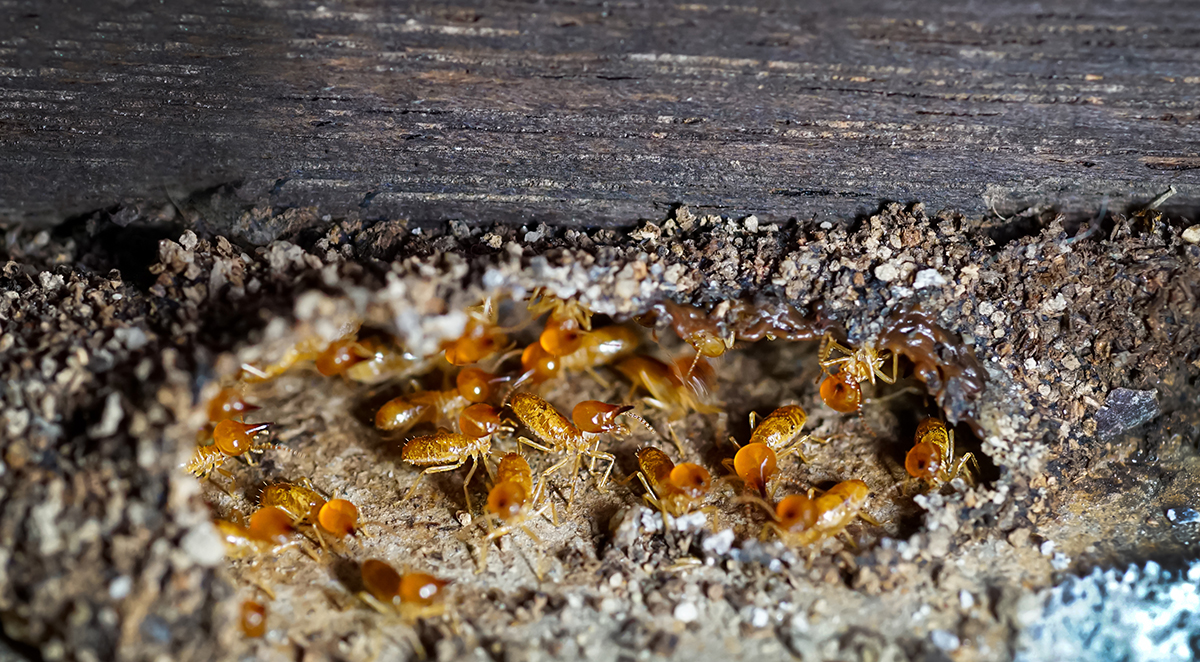
Termites are the pest most homeowners never see until the damage is done. They live and feed inside wood and soil, working quietly out of sight, and by the time obvious signs appear, a colony has often been active for months or longer. Termites cause billions of dollars in structural damage across the country every year, and the overwhelming majority of it happens before anyone realizes there is a problem.
That is what makes early detection so valuable. You almost never catch termites by spotting the insects themselves. You catch them by recognizing the indirect signs they leave behind. This guide walks through the warning signs Indiana homeowners should know, what they mean, and what to do when you see them.
Quick Summary
- Termites rarely reveal themselves directly, so homeowners usually discover them through warning signs: mud tubes along foundations, swarmers or discarded wings in spring, wood that sounds hollow or is visibly damaged, paint that blisters like water damage, and occasionally frass.
- In Indiana, the main threat is the eastern subterranean termite, which lives in underground colonies and reaches wood through the soil. Swarm season runs March through May, although people often act on them during the fall.
- Termite damage compounds over time, and over-the-counter products do not reach subterranean colonies, so a professional inspection is the right response when signs appear.
- Reducing moisture and wood-to-soil contact around your home lowers your risk.
Understanding Termite Season in Indiana
Termites are active year-round, but their visibility follows a seasonal rhythm, and understanding it helps you know what to watch for and when.
The most visible event is swarm season. In Indiana, termite colonies typically send out winged reproductive termites, called swarmers, from March through May, with peak activity around April. Swarmers leave an established colony to start new ones, and finding them in or around your home is one of the clearest signs that a mature colony is nearby. Because swarmers emerge in spring, that is when many homeowners first notice something is wrong.
The concern often does not turn into action until later. Homeowners who saw swarmers or noticed odd signs in spring frequently spend the summer wondering about it, then act in the fall when they finally schedule an inspection. By catching the signs early, you give yourself the best chance to limit damage rather than discovering it after the fact.
The Warning Signs of Termites
These are the signs to watch for. Most are easy to overlook or mistake for something else, which is exactly why termites so often go undetected.
Mud Tubes
Subterranean termites build pencil-width tubes of mud and soil to travel between the ground and their food source while staying protected from open air. You will find these tubes running along foundation walls, crawl space piers, and other surfaces connecting soil to wood. Mud tubes are one of the most reliable indicators of active subterranean termite activity, and they are the single most important sign to know in Indiana.
Swarmers and Discarded Wings
Winged termites emerging indoors, or small piles of discarded wings near windowsills, doorways, and light sources, signal that a colony is established and reproducing. The swarmers themselves are short-lived, but the wings they shed are a lingering clue. Finding them inside is a stronger warning than finding them outside.
Damaged or Hollow-Sounding Wood
Termites consume wood from the inside out, often leaving a thin outer layer intact. Wood that sounds hollow when tapped, or that crumbles or gives way easily when probed, may have been eaten away beneath the surface. Window frames, baseboards, door frames, and structural wood in basements and crawl spaces are worth checking.
Blistered or Bubbling Paint
Moisture produced by termite activity inside walls and wood can cause paint to blister or bubble in ways that look a lot like water damage. Paint that is peeling or distorting without an obvious water source is worth a closer look.
Frass
Frass is termite droppings, and it is associated mainly with drywood termites, which push their waste out of small holes in the wood, leaving tiny pellet-shaped piles. Drywood termites are far less common in Indiana than subterranean termites, so frass is a less frequent sign here, but it is still worth recognizing. Indiana's subterranean termites are more likely to announce themselves through mud tubes than through frass.
Subterranean Termites: Indiana's Main Threat
The termite species of greatest concern in Indiana is the eastern subterranean termite, the most widely distributed and destructive termite in North America. Understanding how it lives explains both why it is so damaging and why certain homes are at higher risk.
Subterranean termites live in large underground colonies and travel up through the soil to reach the wood in and around your home, building those telltale mud tubes to bridge the gap. They need contact with soil moisture to survive, which is why they stay connected to the ground rather than living entirely within the wood.
Several factors raise a home's risk:
- Older homes: Houses built before modern termite practices became standard, especially those with wood-to-soil contact in crawl spaces or basements, carry higher risk.
- Wood-to-soil contact and debris: Wood piles against the foundation, mulch in contact with siding, and buried scrap wood all give termites an easy path to your home.
- Moisture: Poor drainage, leaking gutters, and damp crawl spaces create the conditions termites depend on.
- Previous activity: A home that has had termites before is at elevated risk if the conditions that attracted them were never corrected.
Termites or Ants? How to Tell the Difference
Every spring, homeowners find winged insects swarming near a window and face the same question: are these termites, or just flying ants? It is an important distinction, because one is a structural threat and the other usually is not. The two look similar at a glance but differ in clear ways:
|
Feature |
Termite Swarmer |
Flying Ant |
|
Antennae |
Straight and beaded |
Bent or elbowed |
|
Waist |
Broad, no visible waist |
Narrow, pinched |
|
Wings |
Four wings, all equal length |
Front wings longer than back |
|
Wing durability |
Shed easily, found in piles |
Stay attached |
|
Color |
Dark |
Varies, often black or brown |
If the insect has a straight body with no pinched waist and four equal-length wings, you are likely looking at a termite, and that warrants prompt attention. If you are dealing with the ant side of this question instead, our guide on why ants invade Indiana homes covers carpenter ants and the other common species in detail.
Why You Shouldn't Wait
When termite signs appear, time is not on your side. Termite damage compounds quietly, and the longer a colony works undisturbed, the more extensive and expensive the repairs become. A problem caught at the mud-tube stage is far easier to address than one discovered after structural wood has been hollowed out.
It is also not a problem you can handle from the hardware store. Over-the-counter termite products do not reach established subterranean colonies, which live underground and require professional-grade soil treatments applied around and beneath the structure. Spot-treating the wood you can see does nothing to the colony in the soil. When you see warning signs, the right move is a professional inspection to confirm whether termites are active and how far the problem has progressed.
What Professional Termite Treatment Involves
Professional treatment begins with a thorough inspection of the interior and exterior of your home, including the foundation, crawl space, and any wood near or in contact with soil, looking for live termites, mud tubes, and damage. Based on what the inspection finds, treatment is tailored to your home, typically involving liquid termiticide applied to the soil around and beneath the structure to create a treated zone, and in some cases a bait station program to monitor and control activity. After treatment, addressing the conditions that raised your risk helps prevent a return.
Our termite treatment and prevention page covers the full process, and we hold the termite license required to perform this work in Indiana.
Reducing Your Termite Risk
You cannot make a home completely termite-proof, but you can make it considerably less inviting. The goal is to remove the moisture and wood-to-soil contact that subterranean termites depend on.
- Keep wood and mulch off the foundation: Maintain a gap between siding and any mulch, soil, or wood, and avoid piling mulch against the house.
- Store firewood and lumber away from the structure: Keep woodpiles well clear of the foundation, not stacked against the house.
- Fix moisture problems: Address leaking gutters, poor drainage, and damp crawl spaces, since standing moisture is a magnet for termites.
- Schedule periodic inspections: Regular professional inspections catch new activity early, before it becomes costly structural damage.
Quick Do's and Don'ts
Do:
- Learn to recognize mud tubes, the most reliable sign in Indiana
- Save a few swarmers or wings if you find them, which helps with identification
- Act quickly when signs appear, since damage compounds over time
- Keep moisture and wood-to-soil contact away from your foundation
Don't:
- Assume winged insects in spring are harmless without checking
- Rely on store-bought products against subterranean termites
- Spot-treat visible wood and consider the problem solved
- Wait until fall to act if you noticed signs in spring
Frequently Asked Questions
When is termite season in Indiana?
Termites are active year-round, but they are most visible during swarm season, roughly March through May with a peak around April, when winged swarmers emerge to start new colonies. Concern and action often cluster in the fall, when homeowners follow up on signs they noticed earlier in the year.
What's the first sign most people notice?
For subterranean termites, the most common giveaways are mud tubes along the foundation or crawl space, and the appearance of swarmers or discarded wings in spring. Many homeowners notice the swarmers first, since they emerge in visible numbers.
Are flying termites the same as the ones eating my house?
They come from the same colony. Swarmers are the winged reproductive termites that leave to start new colonies, while the workers that actually consume wood stay hidden. Seeing swarmers means an established colony is nearby, even though the swarmers themselves are not the ones doing the damage.
How do I tell termites from ants?
Termite swarmers have straight bodies with no pinched waist, four equal-length wings, and straight antennae. Flying ants have a narrow waist, front wings longer than the back pair, and bent antennae. If you are unsure, save a specimen and have it identified.
Can I treat termites myself?
Not effectively, when it comes to subterranean termites. They live in underground colonies that require professional-grade soil treatment around and beneath the structure. Over-the-counter products cannot reach the colony, so professional treatment is the only reliable solution for an active infestation.
How often should I get a termite inspection?
Periodic inspections, often annually, are a reasonable safeguard for most Indiana homes, and especially worthwhile for older homes or any home with a history of termite activity. Regular inspections catch problems early, which is when they are least costly to address.
Catch Termites Before the Damage Does
Termites work quietly, but they leave signs for those who know what to look for. Mud tubes, swarmers, hollow wood, and blistering paint are all worth investigating, and the sooner you act, the less damage a colony can do. When it comes to termites, an early inspection is the most valuable step a homeowner can take.
If you have noticed any of these warning signs, contact Sam's Pest Control for a free inspection and we will confirm whether termites are active and what to do about it. We provide licensed termite inspection and treatment across northern Indiana.
Call (219) 290-9489. Monday through Friday, 9am to 5pm. Prompt service available when you call early.